
Whether you’re in the process of launching a new business or already have one, having a strong marketing strategy for small business is extremely important. Also having a strong online presence for your brand is also important. In fact, 97% of people learn about local businesses online more than anywhere else.
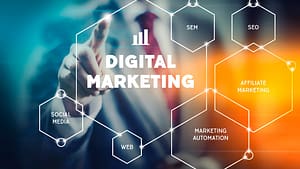
Small business owners looking for a way to track ROI and brand awareness need digital marketing. Not only is digital marketing a must-have for promoting your products or services, but optimizing your online assets is also critical to your business’ overall success.
For local businesses, it’s equally as important to have essential and updated information readily available for potential clients. If you’re a small business owner with little experience in online marketing, this might all sound like a foreign language to you. Have no fear — we’ll go through what all these words mean, and why you should care about them!
Whether you’re struggling with the budget, the time restraints caused by having a smaller team, or even lack direction, a marketing strategy that’s appropriate for your business can guide as you scale.
These strategies are fundamental as you generate awareness and revenue for your organization:
Know your audience.
A key mistake is thinking that “anyone” is your buyer. Larger companies may be able to appeal to a wide market, but they say, “the riches are in the niches” for a reason. A niche is where you’ll have the most leverage as a small business. And to develop a niche and appeal to buyers within the niche, you must understand their pains, problems, triggering events, and priorities.
What is pushing them to make a purchasing decision? What does it look like if they succeed? Knowing these things will help you craft messaging that resonates and makes a compelling case for your solution.
Start by thinking about your existing customers and who you’d like to work with. Then, create a buyer persona to start the process of getting into the head of your ideal client.
Emphasize your value proposition.
If there’s no difference between you and your competition, there’s no reason why a buyer would be compelled to work with you. Your value proposition is what will differentiate you from others in your space and make up your prospects’ minds that you’re the provider to go with. What do you do better than anyone in the industry? Conveying this makes a compelling argument.
Keep the focus on singular goals and objectives.
If you’re exploring the world of marketing, you may have noticed that there are a gazillion directions you can go in. It’s tempting to do it all at once and craft a complicated machine in hopes that you covered all your bases, and it’s easy to take on too much.
Instead, identify where the biggest impact will be. Where is the biggest blind spot in your marketing that’s prohibiting your growth? Set a performance goal around that one key area and focus your resources on the activities and tactics that will achieve that one performance goal. You can expand your efforts or pivot to other initiatives when you’ve made more progress toward that singular goal.
Capitalize on short-term plays.
Start scrappy. As you scale, it’s critical to see ROI sooner. This will give you the momentum and cash flow to put toward larger projects, long-term plays, and more sustainable growth models.
Tactics that take time to build (such as SEO) are poor fits for your primary initiatives because you won’t see a return soon enough for your liking. If you have enough resources to start there, great, but don’t put all your eggs in that basket.
If you have evidence that people are taking to Google with purchasing intent for your particular solution, you may find that paid ads will give you that short-term ROI.
Double-down on what works.
Once you have your initiatives running and you’ve experimented with a few things, pay attention to the data. This can inform you of what’s working. As you scale, it’s a good idea to double-down on proven methods of generating revenue.
Understand the power of existing customers.
It costs, on average, five times more to acquire a new customer than close an existing one. This means you shouldn’t stop marketing once they’ve made a purchase. Identify your opportunities for repeat purchasing, upselling, and cross-selling. Because your existing customers have already made a purchase, they already know, like, and trust you. If you’ve provided a good experience, you’ve given them a reason to do business with you again should the need ever arise.
Even if the need doesn’t arise (in cases where it’s a one-and-done purchase with no upsell opportunities), you should still delight your customers. Word of mouth is a powerful (and free) promotional tool.
Use free promotional tools.
Speaking of free promotional tools, it’s important to note that since you’ve committed to a limited goal and scope, there’s no need to inflate your overhead with gadgets. Use free promotional tools where possible, and only commit to paid tools if you know they will drastically improve existing operations or performance. Here’s a helpful list of marketing tools (some free and paid).
Originally published on Hubspot


Pingback: Simple and easy to use marketing tips for small business
Pingback: How To Overcome Small Business Challenges For Digital Marketing
Pingback: The Principles of Digital Marketing: A Blueprint for Success